Are snake plants toxic to cats?
Written by Meowledge · Last updated
Yes — toxic to cats
What to do if your cat was exposed to snake plant
Call a vet or pet poison hotline. ASPCA lists it as toxic to cats and Pet Poison Helpline reports dilated pupils and a wobbly gait in cats; most cases are stomach upset, but seek urgent care for any wobbliness.
Yes. Snake plants are toxic to cats — saponins in the leaves and stems drive drooling and vomiting, and cats can also show dilated pupils or a wobbly gait. Call a vet or a pet poison hotline; treat any wobbliness as urgent.
- How much is dangerous
- No amount is set by our sources — drooling and vomiting are expected after any ingestion.
- When signs appear
- Not given by our sources.
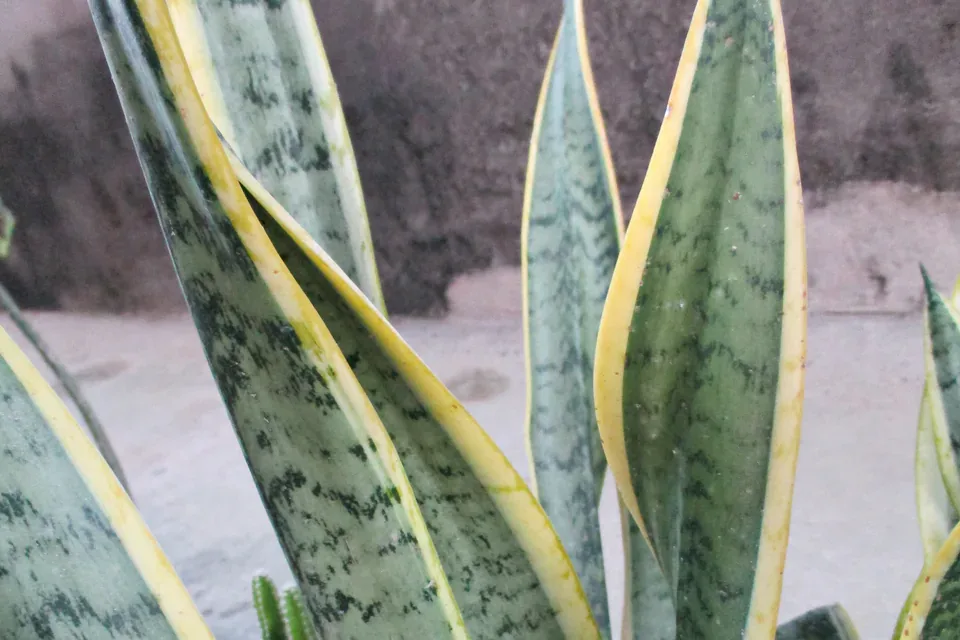
Signs of snake plant poisoning in cats
- Vomiting
- Diarrhea
- Nausea and drooling
- Dilated pupils (reported specifically in cats)
- Wobbly gait (reported specifically in cats)
Are snake plants toxic to cats?
Yes. Snake plants are toxic to cats. The ASPCA lists the plant as toxic to both cats and dogs, which keeps it out of the safe-to-chew group no matter how sturdy the leaf looks.
That verdict covers the houseplant sold under several names, and it sits with the other entries on the plants list, where the toxic and non-toxic groups are kept apart. The plant is grown indoors, so the exposure happens at home rather than in a garden. A cat that chews a leaf on a windowsill is the case this page is written for.
What makes snake plants toxic to cats?
Saponins. Pet Poison Helpline places them within the leaves and stems, and those compounds irritate the digestive tract — the reason a chewed leaf turns into stomach upset.
Both source pages name saponins and no other principle, so there is no second toxin class to weigh here.
> Sansevieria contains plant toxins (saponins) within the leaves and stems. Ingestion by companion animals causes drooling and vomiting. Clinical signs of dilated pupils and wobbly gait reported specifically in cats.
— Pet Poison Helpline, Sansevieria (Snake Plant)
What are the signs of snake plant poisoning in cats?
The ASPCA lists nausea, vomiting and diarrhea. Pet Poison Helpline lists drooling and vomiting, and adds two signs reported specifically in cats: dilated pupils and a wobbly gait.
A wobbly gait is a balance sign rather than a stomach sign, so it changes the urgency even when vomiting has stopped. That is the cat-specific note to pass on when you call.
How much snake plant does it take to poison a cat?
Our sources do not name a milligram or leaf count that flips this from safe to unsafe. Any chew that takes leaf or stem is treated as an exposure, with no safe nibble to aim for.
That is why this page skips a portion guide. Report what was chewed rather than guessing whether the bite was "big enough" on a scale that is not in the record.
Is mother-in-law's tongue the same as snake plant?
Yes. Mother-in-law's tongue is a common name for the same plant, alongside Sansevieria trifasciata, Dracaena trifasciata and good luck plant.
Treat any of those labels as the same plant when you check a pot or a plant tag. The names can differ by shop and by label, but they point to one entry. One trap is the name collision: some people also call Hawaiian Ti a snake plant, though it is a different plant and not the subject of this entry.
How fast do snake plant poisoning signs appear in a cat?
Not given by our sources. We do not print an onset window when the cited pages leave timing blank, so watch the cat rather than a clock.
A calm cat afterward does not prove the exposure was harmless; the record simply has no clock to quote. The signs you can see are the trigger for a call, not a stopwatch. The raw entries behind this page are in the open plant dataset if you want to see the fields we work from.
My cat ate a snake plant — what should I do?
Call a vet or pet poison hotline. Do not induce vomiting at home, and treat any wobbliness as urgent — that gait change is the cat-specific sign that should not wait.
Say how much plant material is missing and whether the cat chewed a leaf or the stem, then follow the clinic's plan. If you are choosing a houseplant for a cat household, plants the ASPCA lists as non-toxic is where to start. Have the plant or a photo ready when you call. A clear photo of the leaf helps the clinic confirm which plant was chewed.
Every claim here traces back to a quoted source — how we grade the evidence.
Sources
1.ASPCA — Snake Plant
Show the quoted lines
Toxic to Dogs, Toxic to Cats Toxic Principles: Saponins Clinical Signs: Nausea, vomiting, diarrhea
2.Pet Poison Helpline — Sansevieria (Snake Plant)
Show the quoted lines
Sansevieria contains plant toxins (saponins) within the leaves and stems. Ingestion by companion animals causes drooling and vomiting. Clinical signs of dilated pupils and wobbly gait reported specifically in cats.
How sources are picked: methodology. Spot an error? Email hello@meowledge.app.
Other plants that are toxic to cats
- Aloe Vera
- Tulip
- Amaryllis
- Begonia
- Carnation
- Catnip
- Chrysanthemum
- Cyclamen
- Daffodil
- Dieffenbachia
- English Ivy
- Eucalyptus
- Hyacinth
- Hydrangea
- Jade Plant
- Kalanchoe
- Lavender
- Mint
- Monstera
- Peace Lily
- Peony
- Philodendron
- Poinsettia
- Pothos