Is aloe vera poisonous to cats?
Written by Meowledge · Last updated
Yes — toxic; the gel is edible
What to do if your cat was exposed to aloe vera
Call a vet or pet poison hotline. ASPCA and Pet Poison Helpline both class aloe as toxic to cats; reported signs are vomiting, lethargy and diarrhea, and the clear inner gel is considered edible.
Yes. Aloe is toxic to cats — saponins and anthraquinones sit in the latex just under the leaf skin and drive vomiting, lethargy and diarrhea, while the clear inner gel is considered edible. Call your vet or an emergency clinic if a leaf was chewed.
- How much is dangerous
- The gel is considered edible, but the plant's saponins and anthraquinones cause vomiting and diarrhoea.
- When signs appear
- Not given by our sources.
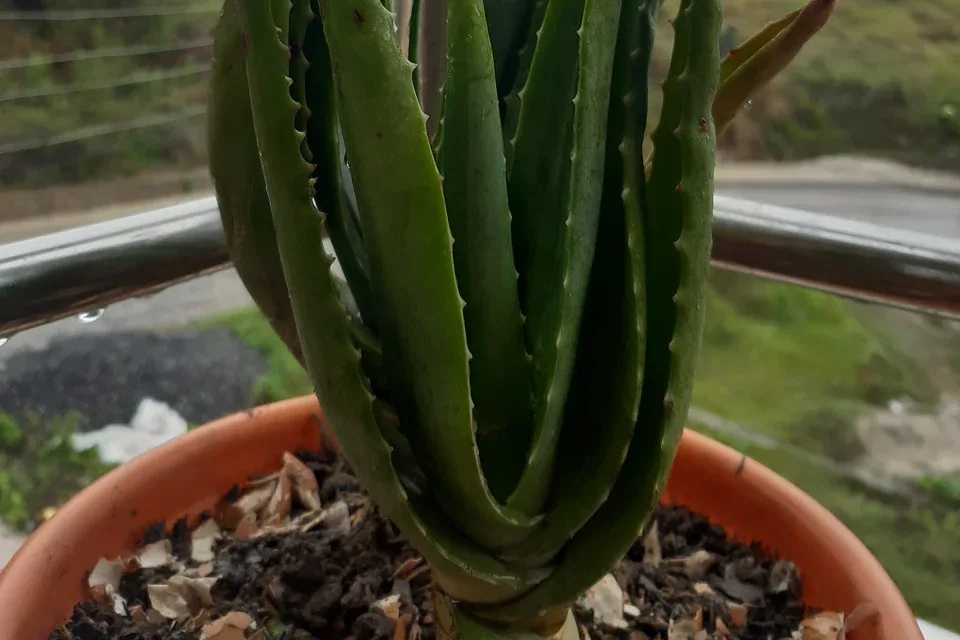
Signs of aloe vera poisoning in cats
- Vomiting
- Lethargy
- Diarrhea
Is the aloe vera plant poisonous to cats?
Yes. Aloe vera is poisonous to cats — the plant is listed as toxic, with saponins and anthraquinones as the principles behind the stomach and energy signs.
That verdict covers the common houseplant sold as medicine plant or Barbados aloe, plus the broader Aloe spp. names on toxic-plant lists. For the wider houseplant picture, start on our plants page.
Is aloe toxic to cats, or only the latex?
Aloe is toxic to cats as a whole-plant entry; the harmful layer is the latex beneath the leaf skin. Clear gel deeper in the leaf is the part sources call edible.
So a chewed leaf can still mean latex exposure even when someone meant only gel. Keep the plant out of reach rather than relying on a clean cut of the centre.
> Toxic to Dogs, Toxic to Cats, Toxic to Horses Toxic Principles: Saponins, anthraquinones Clinical Signs: Vomiting (not horses), lethargy, diarrhea. The gel is considered edible
— ASPCA, Aloe
Can cats eat aloe vera gel?
The clear inner gel is considered edible. That is the part inside the leaf, under the latex layer that sits just under the leaf skin.
Edible gel does not make the potted plant a snack. A house cat that bites a leaf still risks that latex along with whatever gel came with the chew.
Can cats eat aloe vera leaves?
No. Leaves carry the latex just under the skin, and that layer holds the saponins and anthraquinones tied to vomiting, lethargy and diarrhea.
A nibble of leaf is the exposure that matters for a living plant on a sill. If you are picking greenery for a cat household, use plants the ASPCA calls non-toxic instead of aloe.
What are the signs of aloe poisoning in cats?
Vomiting, lethargy and diarrhea are the clinical signs listed for cats. Those are the gut and energy changes tied to the plant's toxic principles.
Horses are carved out of the vomiting note on the same list; for cats the three signs above are what to watch after a leaf chew. Lethargy here means a flat, low-energy cat, not a short nap after play.
How fast do aloe poisoning signs appear in a cat?
Not given by our sources. We do not print an onset window when the cited pages leave timing blank.
Treat timing as unknown and act on what was eaten — leaf versus clear gel alone — rather than waiting for a clock that is not in the record. A quiet hour after the chew does not prove the exposure was harmless.
My cat ate aloe — what should I do?
Call your vet or an emergency clinic. Say whether the cat chewed a leaf or only got clear gel, and roughly how much plant material is missing.
Do not try to make the cat vomit at home. Keep leftover leaf out of reach while you follow the clinic's plan. Every claim here traces to a quoted source — how we grade the evidence.
Sources
1.ASPCA — Aloe
Show the quoted lines
Toxic to Dogs, Toxic to Cats, Toxic to Horses Toxic Principles: Saponins, anthraquinones Clinical Signs: Vomiting (not horses), lethargy, diarrhea. The gel is considered edible
2.ASPCA — Plants Toxic to Cats
Show the quoted lines
Aloe () | Scientific Names: Aloe vera | Family: Liliaceae
How sources are picked: methodology. Spot an error? Email hello@meowledge.app.
Other plants that are toxic to cats
- Tulip
- Amaryllis
- Begonia
- Carnation
- Catnip
- Chrysanthemum
- Cyclamen
- Daffodil
- Dieffenbachia
- English Ivy
- Eucalyptus
- Hyacinth
- Hydrangea
- Jade Plant
- Kalanchoe
- Lavender
- Mint
- Monstera
- Peace Lily
- Peony
- Philodendron
- Poinsettia
- Pothos
- Snake Plant