Can cats eat watermelon?
Last reviewed
Yes — small pieces of flesh only.
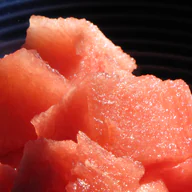
Yes — a small piece of ripe, seedless watermelon flesh is an occasional treat for a cat, but the rind and the seeds stay out of the bowl. Watermelon is an extra, never a meal.
- How much
- A small piece of seedless flesh, occasionally — always remove seeds and rind first.
Treats count toward daily calories — the cat calorie calculator estimates the daily total.
When to call a vet
Stop feeding watermelon and monitor for digestive upset; seek veterinary care if a cat swallowed a large piece of rind (obstruction risk) or if vomiting/diarrhea persists.
Signs to watch for after your cat eats watermelon
- Vomiting or diarrhea if overfed
- Choking or GI obstruction from swallowed seeds or rind
Can cats eat watermelon?
Yes, a cat can eat watermelon flesh in small pieces, as an occasional extra rather than part of the daily food. Cats are obligate carnivores: their digestive systems are built to process animal protein, not fruit.
Treats like this are fine now and then, but they are not a nutritionally complete food. Keep watermelon in the treat column, and keep the cat's usual food as the meal.
Can cats eat watermelon rind?
No — the rind is the part to leave out. It is tough, hard to digest, and in a bad case can block the gut. Cut the flesh away and bin the rind.
If a cat does chew the rind, watch for vomiting or a cat that stops eating, and contact a veterinarian if either appears.
Can cats eat watermelon seeds?
No — seeds come out before the fruit reaches the cat. Black seeds and any stray white ones are a choking risk, and swallowed seeds can block the intestine, especially in a small cat.
Seedless watermelon is the easier fruit to share for that reason. If the melon has seeds, de-seed it on the chopping board first, then cut a small piece of the flesh.
How much watermelon can a cat have?
A small piece of flesh, occasionally — that is the whole rule. Treats should sit inside a tenth to a sixth of a cat's daily calories, and watermelon is a treat on top of a complete food, not a substitute for it.
There is no established watermelon portion in tablespoons anywhere in the sources, so the honest guide is "a small piece, not every day". For another fruit shared the same way, see strawberries or bananas.
What should I do if my cat ate the rind or a seed?
Watch the cat rather than the clock: vomiting, drooling, refusing food or a tender belly are the signs to act on, and a cat that keeps retching or cannot pass stool needs a veterinarian the same day. Bring what is left of the fruit with you if you can.
Small seeds usually pass, but a cat that is straining, vomiting or off its food is not a wait-and-see case. For a second opinion on portions, the food list shows how every other food is treated.
Is watermelon useful for a cat that drinks little?
Watermelon is about 91% water, so a cat that eats a small piece takes in water with it. That is a pleasant extra on a hot day, not a way to treat a cat that is not drinking.
A cat that stops drinking, or drinks far more than usual, needs a veterinarian rather than fruit. The rest of the list is on the food list, and the methodology explains how each quoted line is checked.
What matters at a glance
| Part of the watermelon | Offer it? | Why |
|---|---|---|
| Red flesh, seedless, small piece | Yes, occasionally | The only part the sources describe as shareable |
| Rind | No | Tough and hard to digest; can upset the stomach or block the gut |
| Seeds | No | Choking and blockage risk, especially in small cats |
> While giving your cat an occasional treat is not generally harmful, they are usually not a nutritionally complete and balanced source of nutrition and should only be fed occasionally.
— Cornell Feline Health Center, Feeding Your Cat
> A good rule of thumb is not to let treats exceed 10 to 15 percent of a cat's daily caloric intake.
— Cornell Feline Health Center, Feeding Your Cat
> Watermelon rind is tough and relatively indigestible, and can cause stomach upset or intestinal blockage in severe cases.
— Hill's Pet, Can Cats Eat Watermelon?
> Watermelon seeds can also pose a choking or intestinal blockage risk, especially in small cats.
— Hill's Pet, Can Cats Eat Watermelon?
> Watermelon contains 91% water, and can help hydrate cats who consume small pieces.
— Hill's Pet, Can Cats Eat Watermelon?
Sources
1.Cornell Feline Health Center — Feeding Your Cat
Show the quoted lines
While giving your cat an occasional treat is not generally harmful, they are usually not a nutritionally complete and balanced source of nutrition and should only be fed occasionally.
2.Cornell Feline Health Center — Feeding Your Cat (treat limit)
Show the quoted lines
A good rule of thumb is not to let treats exceed 10 to 15 percent of a cat’s daily caloric intake.
3.Hill's Pet — Can Cats Eat Watermelon? (rind)
Show the quoted lines
Watermelon rind is tough and relatively indigestible, and can cause stomach upset or intestinal blockage in severe cases.
4.Hill's Pet — Can Cats Eat Watermelon? (seeds)
Show the quoted lines
Watermelon seeds can also pose a choking or intestinal blockage risk, especially in small cats.
5.Hill's Pet — Can Cats Eat Watermelon? (water)
Show the quoted lines
Watermelon contains 91% water, and can help hydrate cats who consume small pieces.
How sources are picked: methodology. Spot an error? Email hello@meowledge.app.