Can cats eat dog food?
Written by Meowledge · Last updated
Not as a regular diet — feed cat food.
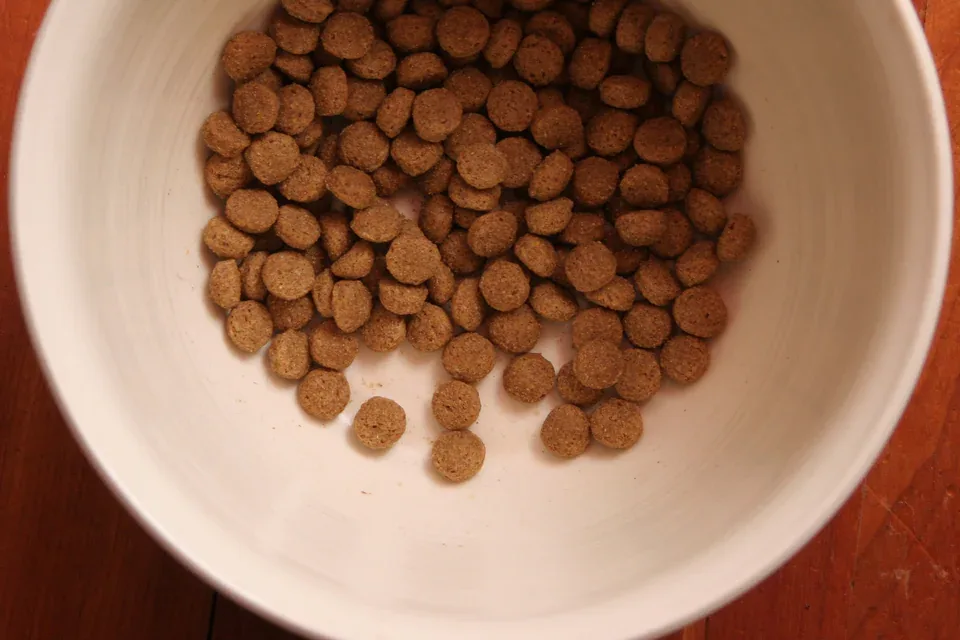
Not as a regular diet. Cats and dogs have different nutritional needs, and food made for dogs can leave a cat short of nutrients it must get from its diet. Feed your cat a complete, balanced cat food.
- Why take care
- Not as a regular diet: cats can develop nutritional deficiencies when fed diets formulated for dogs.
Feed this
- A commercial cat food that is complete and balanced
Do not make this the diet
- Dog food as the cat's regular food
- A homemade diet in place of that cat food
From the Merck Veterinary Manual (sources below).
How to keep your cat off dog food
Feed your cat a complete, balanced cat food and never make dog food its regular diet. In a home with a dog, feed the pets at separate stations. If your cat has been living on dog food, ask your vet to check it.
Problems a dog-food diet can cause in cats
- Heart disease (dilated cardiomyopathy) from a lack of taurine; cats with it typically show severe breathing problems
- Central retinal degeneration (an eye disease), also from a lack of taurine
- Eye problems such as night blindness from a lack of vitamin A
Is dog food bad for cats?
As a regular diet, yes. Merck warns that cats fed diets made for dogs can develop nutritional deficiencies, and a review of cat and dog nutrition concludes that cats should not be fed dog foods.
The same review explains why: cats need more protein than dogs do, and it names arginine as one of those extra needs. Cats also lose more nitrogen from inside the body than dogs do.
What can a cat run short of on dog food?
Unlike dogs, cats must get vitamin A, arachidonic acid and taurine from what they eat. Cats also need more taurine than dogs, so a diet meant for dogs may not give a cat enough of it.
Dogs can use vitamin A from plants and can make arachidonic acid from another fatty acid. Cats cannot use these shortcuts well, so they need both ready-made: vitamin A from sources such as liver or fish oil, and arachidonic acid from the fat in meat, poultry and eggs. A shortage of that vitamin A can show up as night blindness.
Why is taurine so important for cats?
Cats cannot do without it in their diet, and plant proteins contain none, so cats need some animal protein. Merck records that a lack of taurine once caused most cases of a heart muscle disease in cats.
Since that was found, taurine has been added to all commercial cat foods. Most cases in cats today do not respond to taurine; they are primary disease. Merck notes that it still shows up now and then on noncommercial diets, such as vegetarian food, baby food or home-cooked food. The same shortage can also cause central retinal degeneration, an eye disease.
Can heart disease from a lack of taurine be reversed?
It can be. Merck says cats whose heart disease responds to taurine are at high risk of dying at first, but those that survive the 2–3 weeks taurine needs to work have an excellent outlook: the disease is completely reversible.
Cats in this state often arrive struggling to breathe, from fluid in or around the lungs.
Should a cat eat from the dog's bowl?
No, not as a habit. When both animals live in the house, Merck's advice is separate feeding stations, so the cat is not left competing for the dog's food and the stress of that sharing drops.
A stolen mouthful is not the case this page is about. The harm on record is a cat kept on dog food for a long time, which can be detrimental and even deadly. If a cat has been living on it, have a veterinarian examine the cat.
What should I feed my cat instead?
A commercial cat food made to be nutritionally balanced, which Merck recommends over homemade diets. In the United States, the label’s nutritional adequacy statement shows whether a food is complete and balanced for your cat’s life stage.
Your vet can recommend a diet that suits your cat. That adequacy line names a life stage such as growth, reproduction, or adult maintenance. Look up any other food in the food list.
Tuna shows the same rule from the other side: even a food a cat can eat is a treat, not a diet. For a balanced daily portion, try the cat calorie calculator. And every number on this page traces to a quoted primary-source span — the method is on how we grade the evidence.
Sources
1.Merck Veterinary Manual — Proper Nutrition for Cats
Show the quoted lines
Cats should be fed commercially formulated, nutritionally balanced food rather than homemade diets... In the United States, pet food must include a “nutritional adequacy statement.” This statement shows that the food provides complete and balanced nutrition for a specific life stage, such as growth, reproduction, or adult maintenance... Your veterinarian can recommend a diet that is suitable for your cat... Never feed your cat dog food as a regular diet. Cats and dogs have very different nutritional needs... If you have multiple pets, it’s a good idea to set up separate feeding stations to decrease stress and competition for food.
2.Merck Veterinary Manual — Nutritional Requirements of Small Animals
Show the quoted lines
Cats have different dietary requirements than dogs and can develop nutritional deficiencies when fed diets formulated for dogs. For example, unlike dogs, cats require dietary sources of vitamin A, arachidonic acid, and taurine... Taurine is an essential amino acid in diets for cats, and taurine deficiency can cause dilated cardiomyopathy and central retinal degeneration in cats. As a result, cats must have some animal-based protein sources in their diet because plant-based protein sources are devoid of taurine... Cats have an additional requirement for arachidonic acid, another omega-6 fatty acid, which is absent in vegetable oils and fats but found in fat from meat, poultry, and eggs. Unlike dogs, cats cannot readily convert linoleic to arachidonic acid... Beta-carotene is a precursor of vitamin A found in plants, and dogs can readily use plant and animal sources of vitamin A. In contrast, cats cannot convert beta-carotene to vitamin A because they lack the intestinal dioxygenase enzyme necessary for beta-carotene cleavage. As a result, cats require a preformed source of vitamin A in their diet, such as that supplied by liver, fish oil, or synthetic vitamin A. Vitamin A deficiency in dogs and cats can result in ocular changes, such as the following: night blindness (nyctalopia)
3.Merck Veterinary Manual — Dilated Cardiomyopathy in Dogs and Cats
Show the quoted lines
taurine deficiency was responsible for most cases (taurine-responsive DCM). Since then, taurine has been added to all commercial cat foods. Most cases in cats today are not taurine responsive and reflect primary (or idiopathic) disease; however, the disease occurs occasionally in cats fed noncommercial diets (eg, vegetarian food, baby food, home-cooked food)... Cats with DCM typically present with severe respiratory signs due to pulmonary edema and/or pleural effusion... Cats that are taurine responsive also have an initial high risk of death. However, cats that survive long enough for taurine to become effective (2–3 weeks) have an excellent prognosis because the disease is completely reversible.
4.PMC — Amino acid nutrition and metabolism in domestic cats and dogs
Show the quoted lines
Cats have greater endogenous nitrogen losses, as well as higher requirements for dietary protein (including arginine) and taurine than do dogs and, therefore, should not be fed dog foods.
5.PetMD — Is It Safe for Cats to Eat Dog Food?
Show the quoted lines
No, cats cannot be maintained on a dog food diet. If a cat is only fed dog food for a long period of time, then detrimental, if not deadly, consequences can occur.
How sources are picked: methodology. Spot an error? Email hello@meowledge.app.