Are spider plants toxic to cats?
Written by Meowledge · Last updated
No — Non-Toxic to Cats
What to do if your cat was exposed to spider plant
No specific action is needed. Keep the plant out of reach, and call your vet if your cat is unwell.
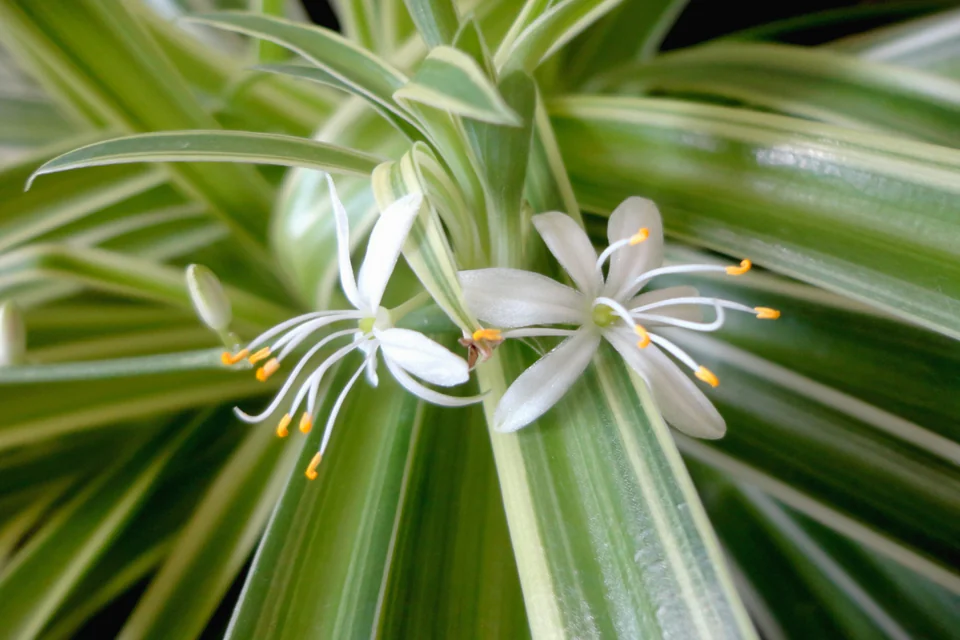
No — the ASPCA lists the spider plant, Chlorophytum comosum, as non-toxic to cats. Dogs are included in that same entry; the classification is not a recommendation to offer the leaves as food.
Signs of spider plant poisoning in cats
- No signs are listed by the ASPCA
Are spider plants toxic to cats?
No. Spider plants are listed as non-toxic to cats. The quoted entry names Chlorophytum comosum specifically, so check that botanical name when deciding whether the listing matches the plant in your home.
Meowledge does not certify this houseplant or claim independent testing. Read how we grade the evidence for the distinction between reporting a published classification and providing our own safety certification.
> Scientific Name: Chlorophytum comosum Family: Asparagaceae Non-Toxicity: Non-Toxic to Dogs, Non-Toxic to Cats > > — ASPCA, Spider Plant
Can cats eat spider plants?
The listing calls the plant non-toxic to cats, but it is a toxicity classification, not a food recommendation. No set amount is stored, and Meowledge does not present the leaves as a snack.
If a cat eats a large quantity, fiber and bulk can still fill the stomach and cause vomiting; that is a volume effect, not evidence of poison. For a plant-by-plant comparison, browse non-toxic plant listings rather than applying this species' listing to every pot.
Are spider plants toxic to cats and dogs?
No. The same ASPCA entry marks Chlorophytum comosum non-toxic to dogs as well as cats, so one listing covers both animals. A separate dog source is not being cited here: both classifications appear together in the quoted text.
A mixed planter needs each plant identified on its own, because this verdict belongs to the spider plant alone. The full plants index is the place to check another name.
Why do cats chew spider plant leaves?
The plant's dangling leaves are the parts cats chew. For keeping a cat from eating them, focus on access to those leaves; the entry does not supply a separate explanation of the cat's behaviour.
Check nearby chairs and shelves when choosing a position for the pot. Aim to put both the container and its trailing growth somewhere the cat cannot reach, rather than relying on the pot being raised.
Is Chlorophytum comosum the same plant as a spider plant?
Yes. Chlorophytum comosum is the botanical name stored for the spider plant. The quoted family is Asparagaceae, and this is a houseplant entry. The family name does not widen the listing beyond this species.
A tag that prints a name other than the stored binomial is not enough on its own to match this entry. Treat an unclear label as an unidentified plant and check it separately rather than assuming the listing applies.
What signs does the ASPCA list for spider plants?
The cited entry does not list clinical signs for this plant. That absence is a gap in the source entry, not a finding that a cat cannot develop symptoms.
The entry supplies no timing either, so no onset is given here. Because the record is silent, judge by the cat's condition and contact a clinic if it seems unwell.
My cat chewed a spider plant — what should I do?
For this identified plant, no special step is needed. Relocate the pot beyond the cat's reach, and ask a veterinary clinic about any illness that appears. Do not attempt to induce vomiting at home.
When you call, describe which plant was chewed, roughly how much leaf is missing, and whether the cat seems well. The quote covers this species only; the open plant dataset holds the stored entry, and any other plant needs its own check.
Sources
1.ASPCA Animal Poison Control — Spider Plant
Show the quoted lines
Scientific Name: Chlorophytum comosum Family: Asparagaceae Non-Toxicity: Non-Toxic to Dogs, Non-Toxic to Cats
How sources are picked: methodology. Spot an error? Email hello@meowledge.app.